BRENDEN CAVAZOS
Product · Strategic Network Exit Tool
How the Excess-Inventory Diagnostic Works
A decision-support product that turned scattered excess-inventory signals into a prioritized, root-cause-ranked action queue -- replacing manual triage with a repeatable workflow that routes each problem to the team best positioned to fix it before liquidation became the default outcome.
33%
overstock inventory reduced
250+
associates trained
Enterprise
scale after handoff
Win in Digital
recognition award
Workflow, at a Glance
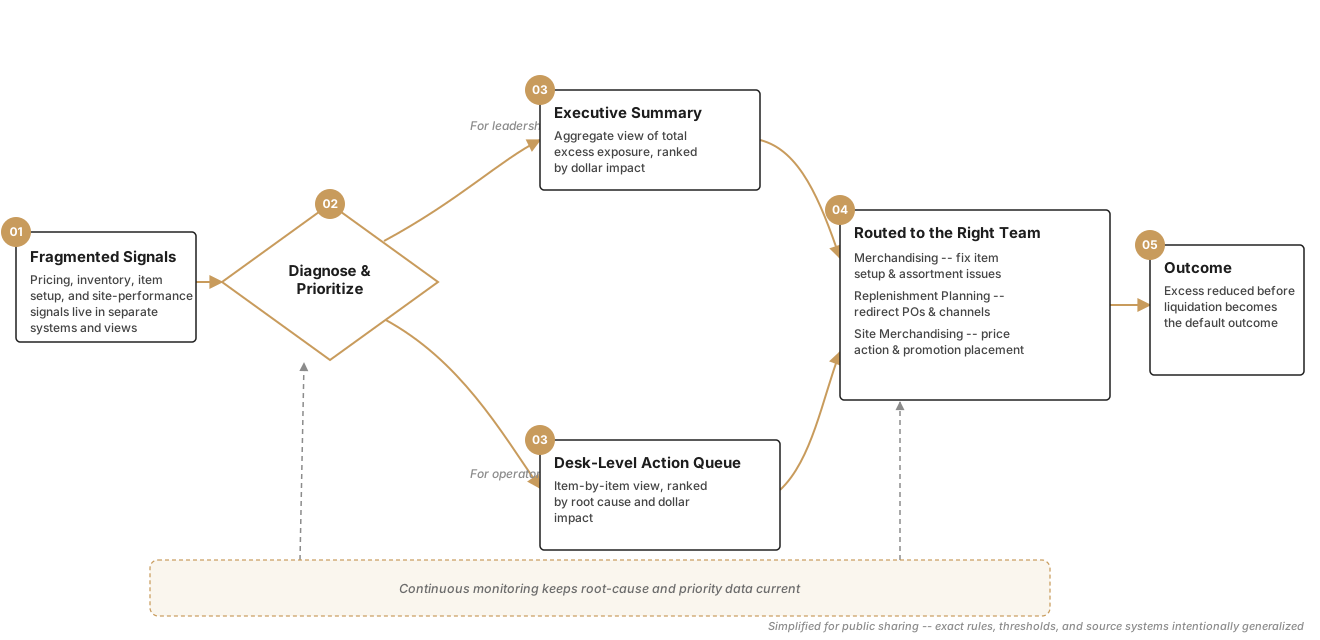
A simplified view of the signal-to-action logic. Exact business rules, thresholds, and source systems are intentionally generalized for this public one-pager.
How It Works, Behind the Scenes
In general terms, the tool continuously evaluates each excess item against a set of common root causes -- item publication status, pricing and promotional state, buy-box competitiveness, page traffic and conversion, and catalog quality -- and returns a plain-language explanation instead of a raw number. That evaluation runs as decision-tree logic built directly into the underlying SQL: each item moves through a chain of conditional checks in BigQuery until it lands on the most likely explanation, and the same query logic calculates the dollar-impact ranking used downstream. Those root causes are then grouped and ranked by dollar impact so the highest-value issues surface first, and routed to whichever team is actually positioned to fix them: merchandising, replenishment planning, or site merchandising. The same underlying model powers both an executive-level aggregate view and an item-level desk view, so leadership and operators are always looking at the same logic.
Technology Behind the Tool
- SQL (decision-tree, conditional root-cause logic)
- BigQuery-based enterprise data warehouse integration
- Automated, scheduled data refresh
- Rule-based root-cause classification model
- Dollar-impact ranking and prioritization logic
- BI dashboard design (executive + desk-level views)
- Cross-functional action-routing logic
Capabilities Demonstrated
- Product discovery
- Decision design
- Root-cause diagnostics
- Inventory strategy
- E-commerce readiness
- Cross-functional enablement
- Change management
- Enterprise scaling